High-Rise Fire Sprinkler Systems: Chlorinated Polyvinyl Chloride Pipe (CPVC)

Terin Hopkins, Manager of Public Fire Protection
High-rise fire sprinkler systems present unique design challenges, but the choice of piping material should not be more complicated than necessary. In both new construction and existing building retrofits, Chlorinated Polyvinyl Chloride Pipe (CPVC) is a practical, reliable, and cost-effective option for sprinkler distribution and should be considered alongside steel from the beginning of the design process.
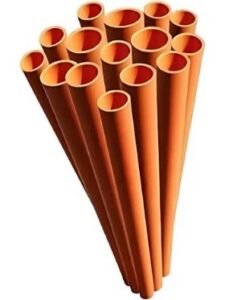 The discussion should not be framed as CPVC versus steel. Both materials have an important role in high-rise fire protection, and the most effective approach is often to use them together. Steel is well suited for standpipes, vertical risers, fire pump piping, mechanical rooms, and other demanding applications. CPVC is particularly well suited for residential floors and other sprinkler distribution areas, with system design coordinated around its listed pressure and installation requirements. The guiding principle is simple: use the right material in the right location.
The Code Supports Material Flexibility
The International Building Code requires automatic sprinkler protection in high-rise buildings and directs sprinkler system design and installation to the applicable NFPA 13 requirements. NFPA 13 provides designers with flexibility in the selection of recognized sprinkler piping materials, including both steel and listed CPVC, based on the conditions of the system and the requirements of the product listing.
This flexibility allows designers to develop a system based on the actual conditions of the building, including pressure, occupancy, exposure, and installation environment, while taking advantage of the strengths of each material.
A Practical Choice for New and Existing High-Rises
In new high-rise construction, a typical system may use a steel riser serving floor control assemblies, steel mains where appropriate, and CPVC branch piping serving residential areas. This arrangement combines the durability and pressure capabilities of steel with the lighter weight, easier routing, and simplified fabrication of CPVC.
Those advantages become even more significant in existing high-rise buildings. Retrofit projects frequently involve occupied apartments, condominiums, hotels, and other finished spaces where contractors must work around ceilings, walls, utilities, furnishings, and daily building operations. CPVC can reduce demolition, noise, material handling, equipment requirements, hot-work activities, and restoration while also reducing the amount of time contractors spend inside individual dwelling units.
For both new and existing buildings, these efficiencies can produce substantial savings when multiplied across multiple floors and hundreds of dwelling units.
Steel and CPVC Work Together

Steel and CPVC can be used effectively within the same sprinkler system using appropriate listed transition fittings and installation methods. A high-rise system may use steel for standpipes, risers, fire pump piping, and other demanding environments, while CPVC is used downstream for sprinkler distribution.
This hybrid approach also helps address the pressure conditions commonly found in high-rise buildings. Systems frequently incorporate pressure zones, pressure-reducing valves, floor control assemblies, and other pressure-management strategies. Steel can serve the portions of the system subject to greater pressure demands, while CPVC can be used in areas where operating pressures are within its listed limits.
The appropriate piping material should be selected based on the conditions at each point in the system rather than simply the height of the building. This is not a compromise in design; it is an efficient use of both materials based on their strengths.
Installed Cost Is the Real Measure
 The economic benefit of CPVC should be evaluated based on total installed cost rather than simply the price per foot of pipe. Total cost includes material, labor, fabrication, equipment, material handling, ceiling and wall access, restoration, occupant coordination, and overall project duration.
In new construction, the lighter weight and simpler fabrication of CPVC can improve contractor productivity and reduce installation labor. In existing buildings, easier routes and installation can reduce demolition, restoration, unit-access time, and disruption to occupants. These savings can be significant on a high-rise project where the same installation activities are repeated across dozens of floors.
Cost is particularly important in high-rise retrofit discussions, where the expense and disruption of construction are often cited as major barriers. Using CPVC as part of a well-designed hybrid system can reduce project scope and installed cost while maintaining the required level of fire protection.
Making Use of Existing Infrastructure
CPVC can also support the effective use of existing fire protection infrastructure during retrofit projects. Existing standpipes, risers, fire pumps, and water supplies can be evaluated based on their condition, available pressure and flow, and ability to support the proposed sprinkler demand.
Where the existing infrastructure can support the new system, new floor control assemblies can be connected to steel risers, with CPVC used to distribute sprinkler piping throughout residential areas. This approach can avoid unnecessary replacement of major building systems, reduce project scope, and provide a practical path to complete sprinkler protection.
Proper Installation Remains Essential
As with every fire protection material, CPVC must be installed in accordance with its listing and the manufacturer’s requirements. Designers and contractors must consider system pressure, temperature limitations, hanger requirements, concealment, firestopping, and material compatibility. Sealants, lubricants, firestopping products, paints, insulation, and other adjacent materials should be verified for compatibility with the CPVC system.
These are normal design and installation considerations for a listed fire protection product. Proper system design means understanding the characteristics and limitations of each material and applying them where they provide the greatest benefit.
The Right Material in the Right Location
 As new high-rise buildings are designed and existing high-rises are retrofitted, CPVC should be viewed as a primary sprinkler piping option alongside steel. Its lighter weight, installation efficiency, adaptability, and potential cost savings make it especially valuable in residential high-rise applications.
The goal is to design the most effective and economical sprinkler system by taking advantage of the strengths of both materials.
 Terin Hopkins has 40 years of experience in public safety, fire protection, and life safety policy. He currently serves as the Manager of Public Fire Protection for the National Fire Sprinkler Association (NFSA), where he leads technical support and advocacy efforts nationwide, working closely with fire departments, code and standard, and policymakers to improve fire protection infrastructure and compliance. He represents NFSA on NFPA and UL technical committees, including NFPA 14 Standard for the Installation of Standpipe and Hose Systems.